




Description
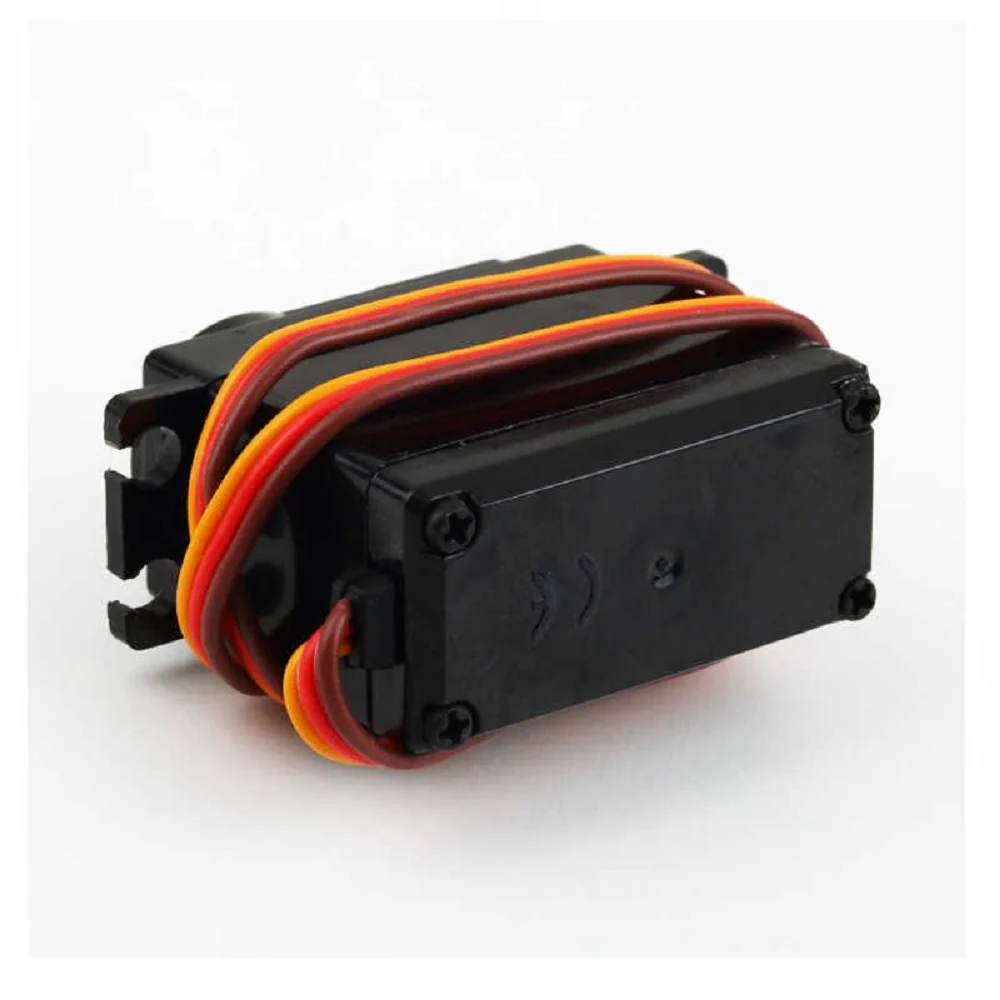
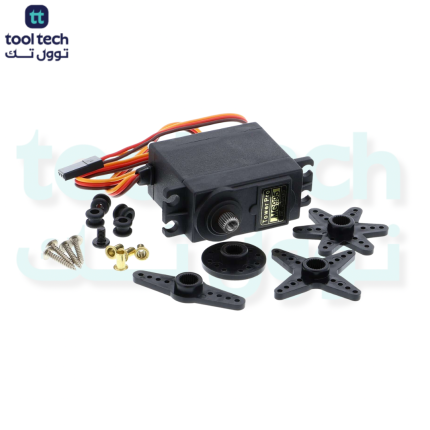
The MG995 360-Degree “Half Metal” Servo is a high-torque, continuous-rotation motor commonly used in robotics, remote-controlled (RC) models, and automation projects.
What “360-Degree” Means Here
Unlike standard servos that rotate to a specific angle (e.g., 0° to 180°), a 360-degree servo is a “continuous rotation” servo.
-
No Positional Control: You cannot command this servo to go to a specific degree (like “turn to 90 degrees”).
-
Speed and Direction Control: Instead, you use a standard PWM (Pulse Width Modulation) signal to control the direction (clockwise/counter-clockwise) and the speed of rotation.
-
Neutral Point: A center signal (typically ~1.5ms pulse width) tells the motor to stop. Increasing or decreasing the pulse width from that center point makes the motor spin faster in one direction or the other.
Key Specifications
-
Rotation: Continuous 360-degree rotation.
-
Gear Type: “Half Metal” indicates that the gear train is a mix of high-strength metal gears (often steel or brass) and high-quality plastic/nylon gears. This provides a good balance between durability and reduced noise/cost compared to full-metal-gear versions.
-
Torque: High-torque performance (typically around 13–15 kg/cm at 6V), making it powerful enough for robotic wheels, conveyor belts, or rotating camera mounts.
-
Operating Voltage: Usually operates between 4.8V and 7.2V DC.
-
Dual Ball Bearings: Most MG995 models include dual ball bearings on the output shaft, which helps reduce friction and allows the servo to handle higher mechanical loads smoothly.
Common Applications
-
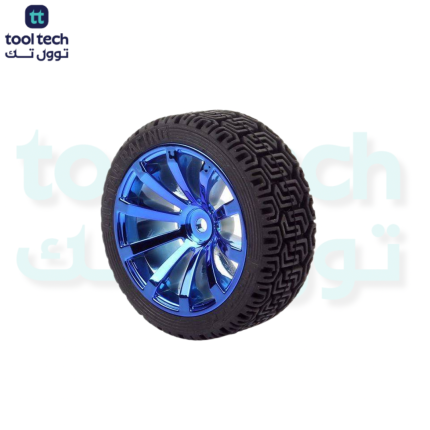
Robotic Wheel Drives: An excellent, cost-effective alternative to dedicated DC motors because they have built-in speed and direction control circuitry inside the same housing.
-
Conveyor Belts: Used in small-scale automation for moving items.
-
Rotating Assemblies: Ideal for platforms that need to spin indefinitely, such as rotating sensors, turrets, or display stands.
Important Note for Users
If you are used to programming standard 180° servos (where sets an angle), you will need to adjust your approach. For this 360-degree version, will typically command the motor to stop, while values above or below 90 will determine the rotation speed and direction.
Do you need help with the wiring diagram or the code (e.g., for Arduino) to control this servo?




















Reviews
There are no reviews yet.