


Description
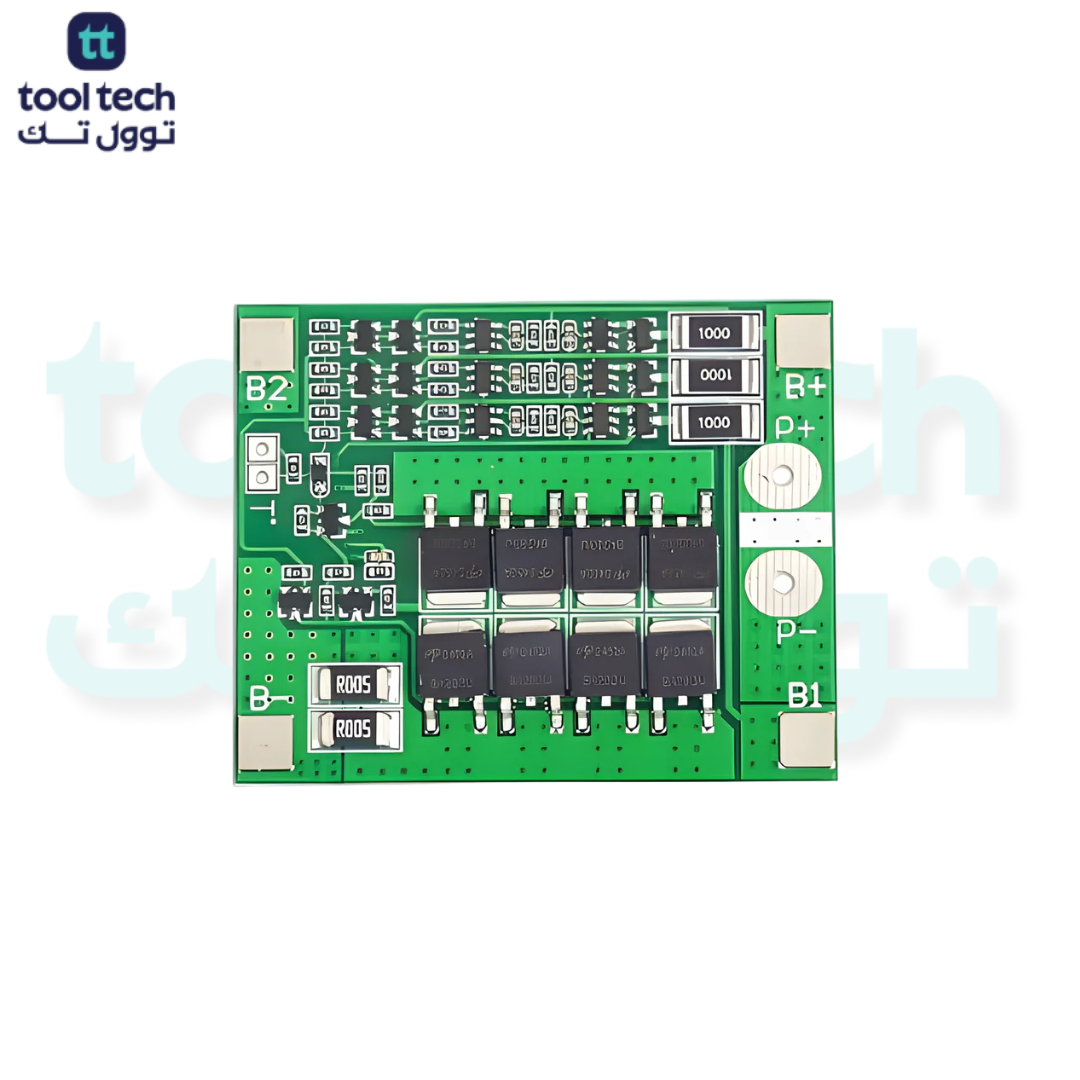
3S 25A Lithium Battery Management System (BMS)
The 3S 25A BMS is a compact protection circuit board designed for 3-series (3S) Lithium-ion or Lithium-polymer battery packs. It provides essential safety monitoring for packs with a nominal voltage of 11.1V (fully charged to 12.6V). It is widely used in DIY electronics, portable tools, and small-scale energy storage projects.
Technical Specifications
| Feature | Specification |
| Compatible Cells | 3-Series (11.1V nominal / 12.6V max) |
| Continuous Discharge | 25A |
| Charging Voltage | 12.6V (CC/CV) |
| Overcharge Threshold | 4.25V ± 0.05V |
| Over-discharge Threshold | 2.50V ± 0.1V |
| Balanced Charging | Included (for even cell charging) |
| Short Circuit Protection | Included |
| Dimensions | Typically compact (approx. 50mm x 15mm) |
Key Functions & Protections
-
Comprehensive Safety: Monitors each cell individually. If any cell voltage exceeds the overcharge limit or drops below the over-discharge limit, the BMS disconnects the circuit to protect the pack from damage or fire.
-
Active Balancing: Integrated circuitry ensures that all three cells in the series reach the same voltage level during charging, preventing the pack’s capacity from degrading due to “cell drift.”
-
Overcurrent Control: Designed for a 25A continuous discharge, it provides protection against excessive current draws that could overheat the cells or damage the electronics.
-
Common Port Configuration: Most versions use a common port for both charging and discharging, simplifying the wiring harness to just four main connection points (Battery Positive, Battery Negative, and the Load/Charger terminals).
Important Installation & Safety Guidelines
-
Wiring Sequence (Crucial): Always connect the balance leads in order: Start from the most negative cell (0V), then to the first positive (3.7V), second positive (7.4V), and finally the third positive (11.1V). Never connect the balance plug while the main battery wires are live.
-
Cooling: If you are consistently drawing near the 25A limit, the MOSFETs on the board will heat up. Ensure there is adequate airflow around the board to maintain its lifespan.
-
Charger Requirements: You must use a dedicated 12.6V (3S) Lithium charger using a Constant Current/Constant Voltage (CC/CV) method. Do not use a standard power supply without proper current/voltage regulation.
-
Load Management: This BMS is designed for battery safety, not as a motor controller. If you are using this for high-inductive loads (like motors), ensure the starting “inrush” current does not exceed the BMS’s peak discharge rating.















Reviews
There are no reviews yet.