


Description
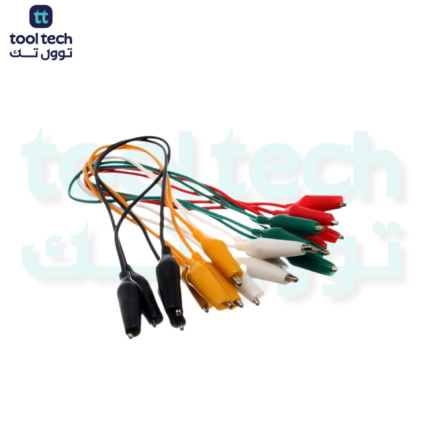
These cables are commonly referred to as Digital Multimeter Test Leads or Multimeter Probe Leads. They are the critical physical interface between your multimeter and the circuit or component you are testing.
Product Specifications
| Feature | Typical Specification |
| Product Name | Digital Multimeter Test Leads (Probe/Pen Style) |
| Connector Type | Universal 4mm Shrouded Banana Plugs |
| Total Length | Commonly 100 cm (approx. 1 meter) |
| Probe Tip Type | Sharp-tipped, needle-style probes |
| Voltage Rating | Typically 1000V (Check your specific pair for CAT ratings) |
| Current Rating | Typically 10A (Maximum) |
| Wire Material | Multi-strand copper wire |
| Insulation | High-quality PVC or soft Silicone |
| Color Coding | Red (Positive/+) and Black (Negative/-) |
Key Features
-
Universal Compatibility: The 4mm banana plugs are the industry standard, meaning these leads will work with almost any handheld digital multimeter on the market.
-
Safety Design: Modern leads feature “shrouded” plugs (plastic sleeves around the metal connector) to prevent accidental contact if the plug is partially pulled out, as well as finger guards on the probe handles to keep your fingers safely behind the conductive tip during use.
-
High Precision: The sharp, often gold-plated or nickel-plated tips allow you to probe small surface-mount components (SMD), breadboards, and tightly packed circuit boards with high accuracy.
-
Durability: The flexible insulation is designed to withstand thousands of bends without cracking or breaking, which is essential for heavy-duty field or laboratory use.
Safety & Usage Tips
-
Check the CAT Rating: Always ensure your test leads are rated for the voltage category (CAT II, III, or IV) of the environment you are working in. Never use leads that lack these safety markings for mains (household) electrical work.
-
Inspect Before Use: Always perform a quick visual inspection before measuring. If you see cracks in the insulation or exposed wire, replace them immediately.
-
Finger Guards: Always keep your fingers behind the finger guard on the probe handle to ensure you do not make contact with the circuit while testing.
-
Proper Storage: Avoid wrapping the leads tightly around the multimeter, as this can cause sharp bends that fatigue the internal copper strands over time.
Are you looking to replace a damaged set, or are you trying to determine if a specific set of leads is safe for a particular voltage task?















Reviews
There are no reviews yet.