


Description
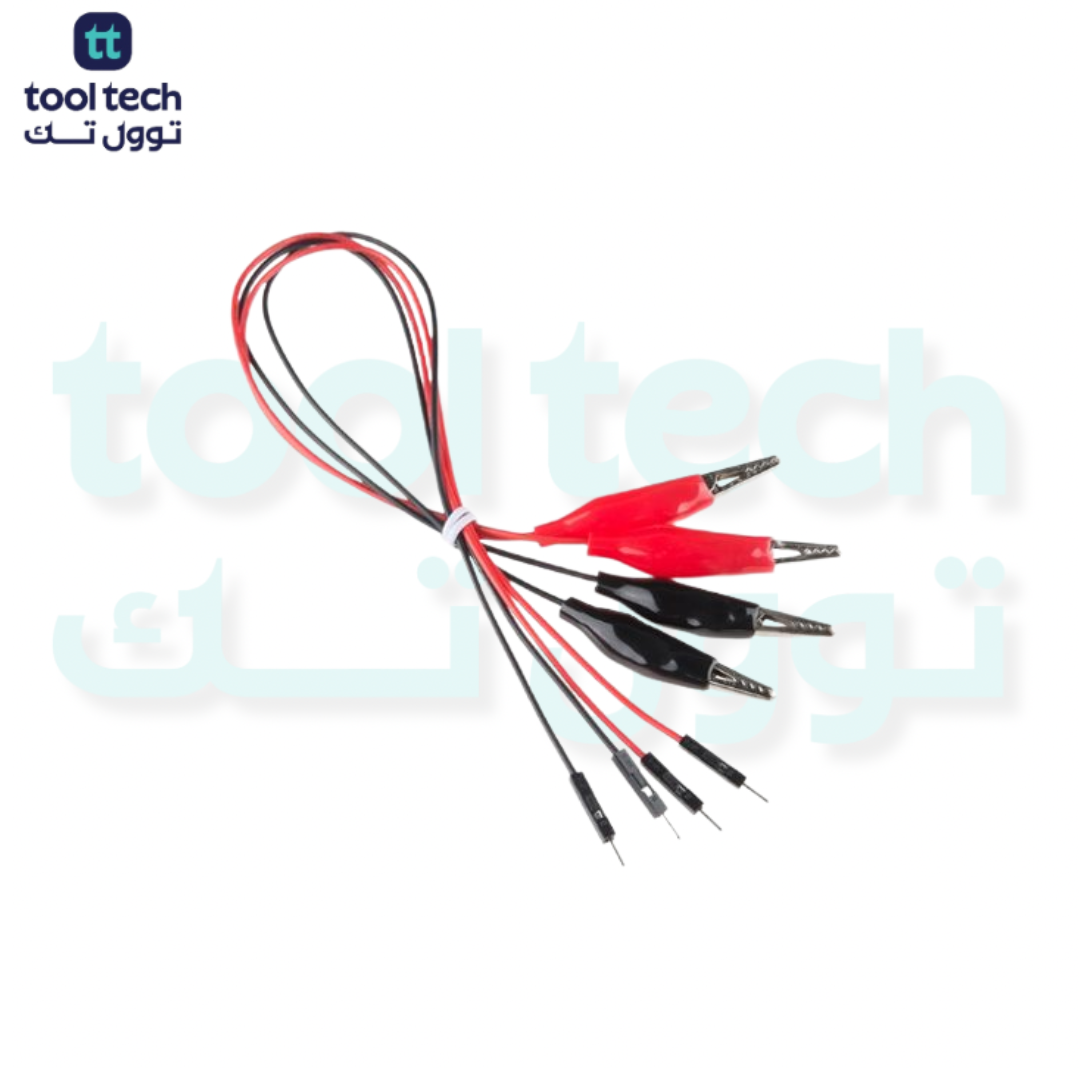
The product you are referring to is commonly known as Male to Crocodile (Alligator) Clip Jumper Wires. These are highly specialized cables designed to bridge the gap between standard electronics prototyping equipment and components that do not have header pins.
Product Specifications
| Feature | Specification |
| Product Name | Male to Crocodile/Alligator Clip Jumper Wires |
| Connector Type | Male Jumper Pin (one end) to Alligator/Crocodile Clip (other end) |
| Quantity | 4 Pack (common configuration for this specific type) |
| Length | 35 cm (~13.8 inches) |
| Pin Pitch | 2.54 mm (0.1 inch) — compatible with standard breadboards/Arduino headers |
| Clip Type | Small/Mini Alligator Clip (insulated with vinyl/plastic) |
| Wire Material | Multi-strand copper wire |
| Insulation | Flexible PVC or Silicone |
Why use this cable?
Standard DuPont wires (like the Female-to-Female ones you asked about earlier) require a male header pin to connect. However, many components in the real world—such as battery terminals, bare wires, or specialized sensor pads—do not have these pins.
-
The “Crocodile” end allows you to “bite” onto these non-standard surfaces.
-
The “Male” end allows you to plug that connection directly into a breadboard or the header pins of an Arduino, Raspberry Pi, or other development boards.
Common Applications
-
Battery Connections: Connecting battery holders to breadboards without soldering.
-
Component Testing: Quickly connecting a multimeter probe or a loose LED/switch to a circuit.
-
Non-Header Components: Connecting alligator-friendly surfaces (like those found on a Micro:bit or conductive fruits/objects in educational projects) to a breadboard.
Is there a specific project you are working on where you need to connect alligator clips to a breadboard or a controller board?

















Reviews
There are no reviews yet.