




Description
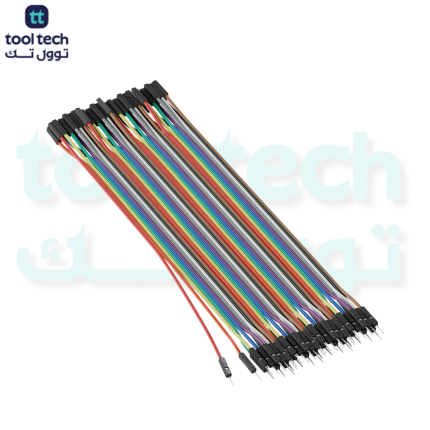
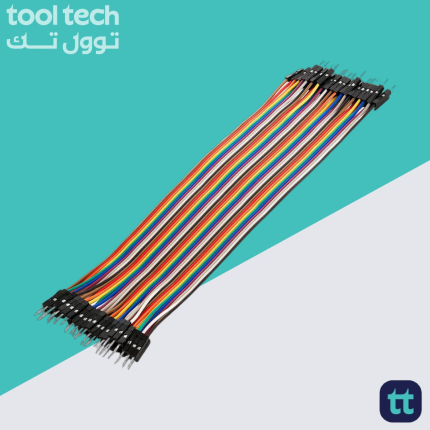
What Does “Male-to-Female” Mean?
-
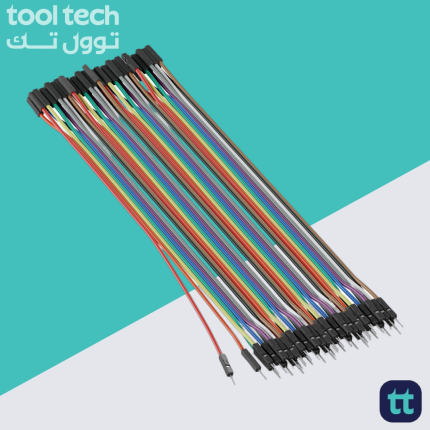
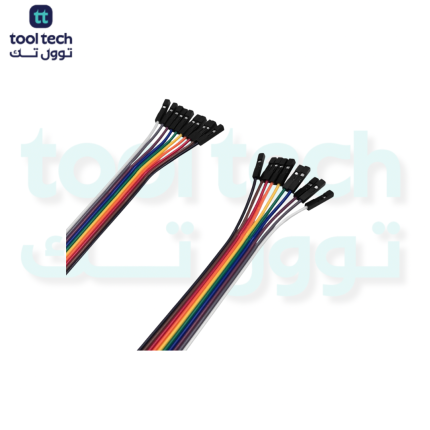
Male End (Pin): Has a protruding solid metal pin that is designed to be inserted into a socket, header, or breadboard hole.
-
Female End (Socket): Has a hollow receptacle designed to accept and grip a male pin.
-
Function: This configuration is specifically used when you need to bridge the gap between a component with a female header (like a sensor module) and a device with male header pins (like an Arduino or Raspberry Pi GPIO header).
Specifications
-
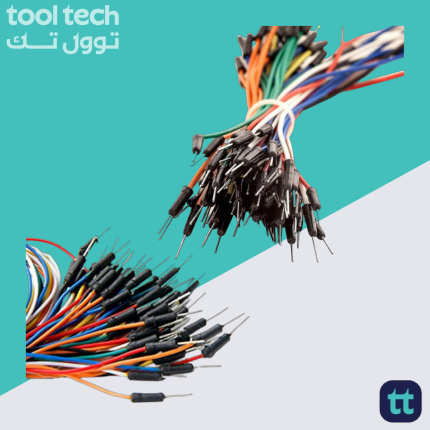
Length: 20 cm (ideal for prototyping where you need enough reach between components without excessive, cluttered wiring).
-
Connector Compatibility: Typically designed for a 2.54 mm (0.1″) pitch, which is the standard spacing for most hobbyist electronics (Arduino, breadboards, Raspberry Pi).
-
Wire Material: Usually made of stranded copper wire with PVC insulation to ensure flexibility and durability during repeated use.
Why Are They Useful?
-
Solderless Prototyping: They allow you to test and iterate on circuits rapidly. You can plug and unplug them as many times as you like without needing to solder components permanently.
-
Versatility: They act as “bridges” to connect sensors, displays, and motors to your main control board.
-
Color Coding: They often come in multi-colored packs. This is not just for aesthetics; it helps you trace specific signals (e.g., using Red for 5V, Black for Ground/GND, and other colors for data/signal lines) to prevent wiring errors.
-
Diagnostic Tooling: When a circuit isn’t working, these wires make it easy to swap out components or bypass sections of the circuit to isolate a fault.
Typical Applications
-
Connecting an Arduino or ESP32 to a breadboard.
-
Linking peripheral sensors (like DHT11 temperature sensors, ultrasonic sensors, or LCD displays) to a microcontroller.
-
Extending the reach of existing connections in robotics or DIY electronics projects.
















Reviews
There are no reviews yet.