


Description
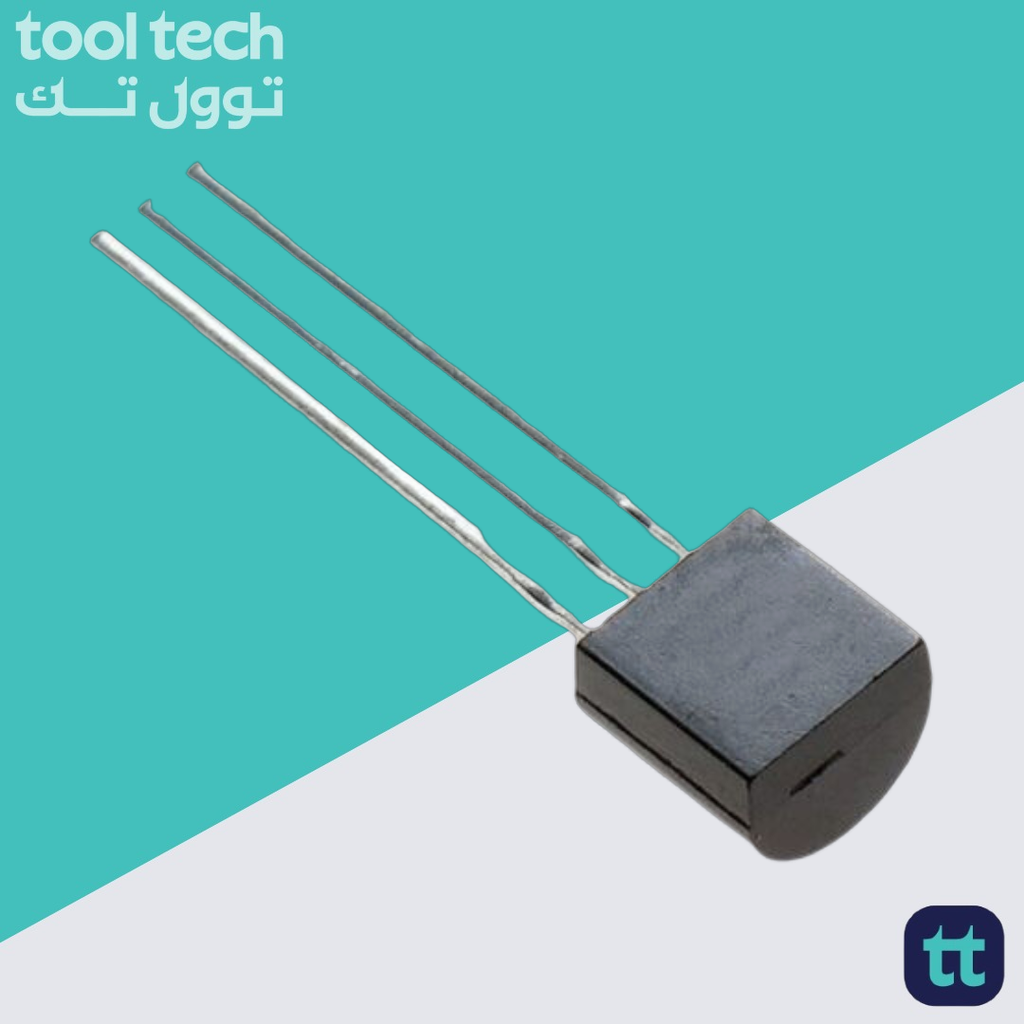
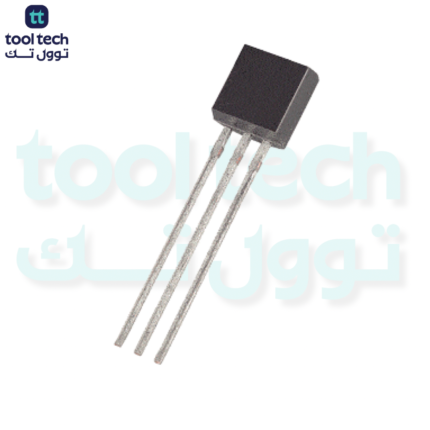
The 2N3906 is a classic, general-purpose PNP bipolar junction transistor (BJT). It is one of the most common transistors in electronics, frequently used in low-power switching and amplification tasks. It is the PNP complement to the widely used NPN 2N3904.
Key Specifications
| Parameter | Symbol | Rating |
| Collector-Emitter Voltage | $V_{CEO}$ | -40V |
| Continuous Collector Current | $I_C$ | -200mA |
| Power Dissipation | $P_D$ | 625mW |
| DC Current Gain | $h_{FE}$ | 100–300 (at 10mA) |
| Transition Frequency | $f_T$ | 250MHz |
Key Characteristics & Applications
-
General-Purpose Utility: Because it is inexpensive, reliable, and available everywhere, it is the default choice for simple logic circuits, small signal amplification, and acting as a switch for low-power loads.
-
Low-Power Switching: It can easily switch small relays, LEDs, or act as a driver for larger transistors. Given its 200mA limit, it is ideal for small auxiliary circuits but should not be used for motor or high-current loads directly.
-
Complementary Pair: When you need an NPN/PNP pair for push-pull stages or bridge circuits, the 2N3904 (NPN) and 2N3906 (PNP) are the standard “go-to” combination.
Design Considerations
-
Pinout: In the standard TO-92 plastic package, looking at the flat side with leads pointing down, the pins are Emitter (1), Base (2), and Collector (3). Note: Always verify with your specific datasheet, as some manufacturers vary the pinout.
-
Base Drive: As a BJT, it is current-controlled. To ensure it is fully “ON” (saturated) when used as a switch, ensure your base drive current is roughly $1/10^{th}$ of your collector current.
-
High-Side Switching: Since it is a PNP, it excels at switching “high-side” loads (connecting a load to the positive voltage rail). A common mistake is forgetting that the base must be pulled low to turn it ON; ensure your driver circuit (like a microcontroller output) is configured to pull the base towards ground through a resistor.
Comparison to Other Transistors
-
vs. BC546/BC556: The 2N3906 is very similar to the BC556 series, though the BC series often has higher voltage ratings ($V_{CEO}$).
-
vs. 2N5401: The 2N3906 is for low-voltage (40V) general tasks, whereas the 2N5401 is specifically for high-voltage (150V) applications. Don’t use the 2N3906 if your circuit rail is above 35V, as it will likely break down.














Reviews
There are no reviews yet.