



Description
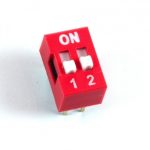
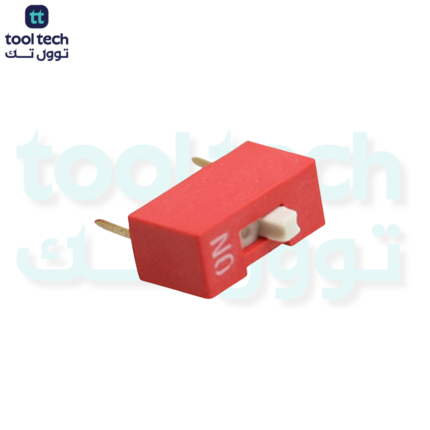
DIP Switch (2-Way)
The 2-Way DIP Switch is a compact, reliable board-level configuration component designed for setting operational modes, address identification, or enabling/disabling specific logic features on printed circuit boards (PCBs). Its dual-channel design provides two independent SPST switches in a single, space-efficient package, making it an essential component for electronics prototyping, industrial controllers, and custom hardware interfaces.
Key Features
-
Dual-Channel Configuration: Contains two independent, switchable circuits, allowing for multiple hardware configurations or binary settings (up to 4 combinations) within a single, low-profile unit.
-
PCB-Ready Design: Specifically engineered for standard 2.54mm (0.1″) pitch breadboards and PCB through-hole mounting, ensuring seamless integration into your electronic projects.
-
Tactile Latching Mechanism: Provides clear, physical feedback for each switch position, ensuring reliable state retention that resists accidental adjustment during operation or assembly.
-
Professional Compact Profile: Its slim design saves board real estate while maintaining a clean, industrial appearance suitable for professional-grade consumer electronics and control systems.
Technical Specifications
| Feature | Specification |
| Switch Type | DIP (Dual In-line Package) |
| Positions | 2-Way (Dual SPST) |
| Mounting Style | PCB Through-Hole (Standard 2.54mm pitch) |
| Operation | Sliding/Toggle Latching |
| Contact Rating | Low-voltage signal (typically 25mA / 24V DC) |
Catalog Strategy
-
Professional Imagery: Maintain your high standards: sharp focus, pure white background, no retail packaging, no labels, and no text. Ensure the toggle levers and terminal pins are clearly visible to allow for quick confirmation of the switch type by professional buyers.
-
SEO & Visibility: Use terms such as “2-way DIP switch,” “PCB mode selector,” “2-channel slide switch,” and “Electronics configuration switch” to optimize visibility for your Egyptian and international technical customers.
-
Catalog Consistency: Keep the labeling for this component uniform with your 1-way models to help your customers easily identify and filter through your inventory of board-level components.













Reviews
There are no reviews yet.