



Description
1. The Displays
The modules are identified by their character capacity (Columns × Rows):
-
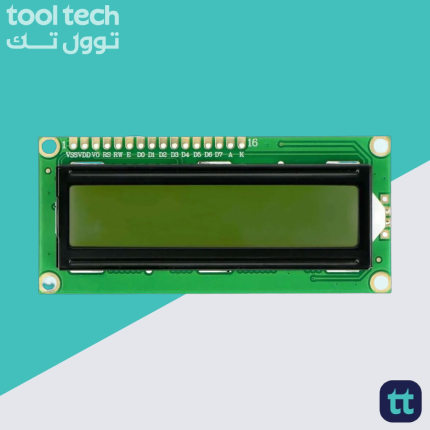
16×2 LCD Module
-
Capacity: Displays 16 characters per line across 2 lines (32 characters total).
-
Description: This is the most common industry-standard size. It uses a 5×8 pixel matrix for each character.
-
-
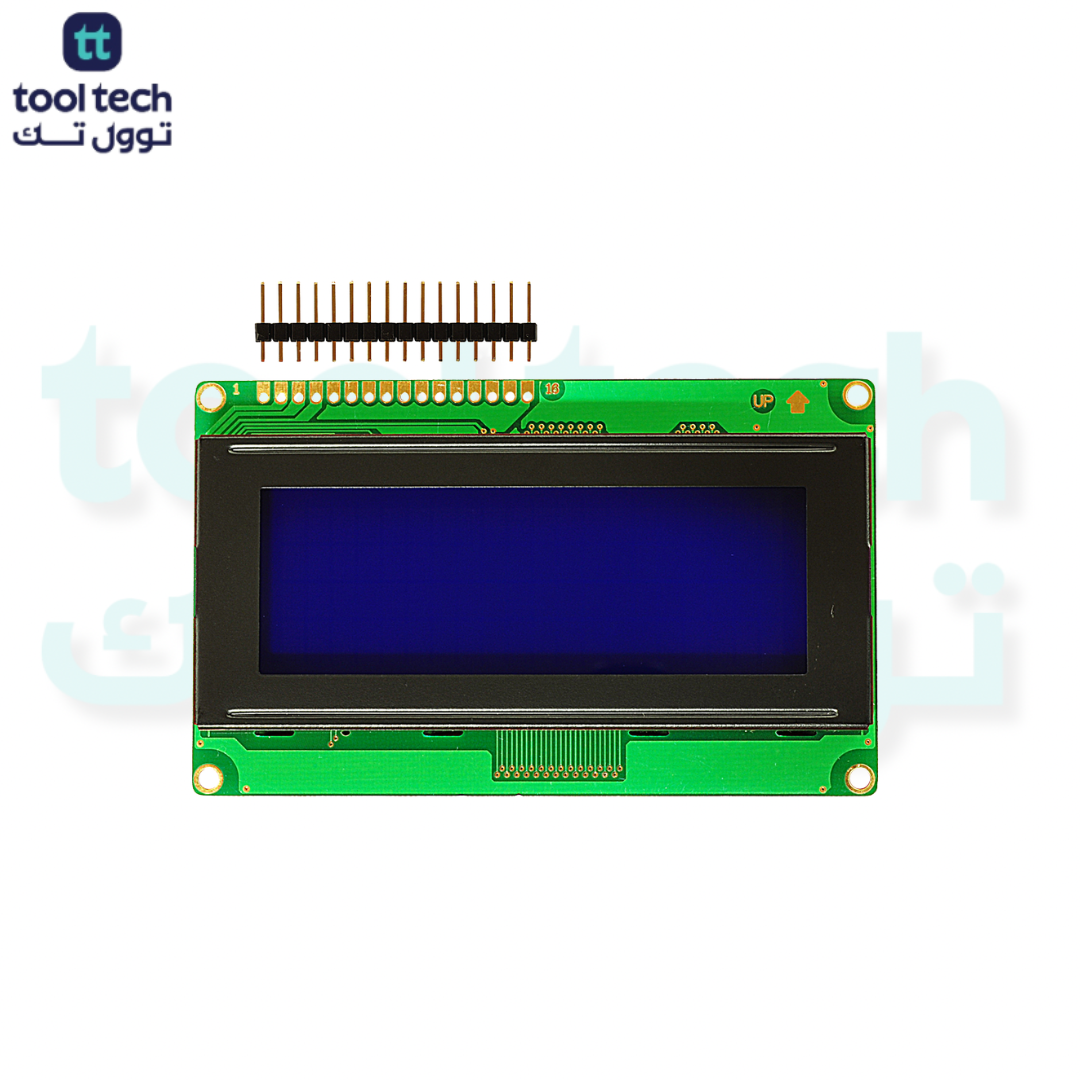
20×4 LCD Module
-
Capacity: Displays 20 characters per line across 4 lines (80 characters total).
-
Description: This module provides significantly more display area, making it ideal for projects that need to display multiple lines of data simultaneously.
-
2. General Product Specifications (Typical)
While the size differs, both modules share the same underlying controller technology and electrical requirements.
| Feature | Specification |
| Controller IC | HD44780 (industry standard) |
| Operating Voltage | 5V DC |
| Communication | Parallel (16-pin) or I2C (with adapter) |
| Display Type | Alphanumeric Character LCD |
| Character Matrix | 5 × 8 dots per character |
| Operating Temperature | -20°C to +70°C |
3. Key Components
The I2C Backpack
The display in the first image includes a small circuit board soldered to the back, known as an I2C Backpack.
-
Purpose: Standard parallel LCDs require 6 to 12 wires to connect to a microcontroller. This backpack uses an I/O expander chip (usually the PCF8574) to convert the data into the I2C protocol, allowing the display to be connected using only 4 wires (VCC, GND, SDA, SCL).
-
Contrast Control: The blue potentiometer (trimmer) located on this backpack is essential; it allows you to manually adjust the contrast to make the text visible.
Pinout (Standard 16-pin Interface)
If you are not using the I2C backpack, these modules are designed to connect via a 16-pin header at the top:
-
VSS: Ground (GND)
-
VDD: Power (+5V)
-
V0 (or VEE): Contrast adjustment pin (connected to a potentiometer)
-
RS: Register Select
-
RW: Read/Write
-
E: Enable
-
D0-D7: Data pins
-
A / K: Backlight Anode (+) / Cathode (-)















Reviews
There are no reviews yet.