




Description
Overview
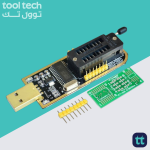
This is a low-cost, versatile hardware tool commonly used by electronics hobbyists, technicians, and developers to read, write, and erase EEPROM and Flash memory chips. It is widely popular for its ability to interact with BIOS chips on motherboards, router firmware, and various other serial memory ICs.
Key Features and Components
-
USB Interface: Plugs directly into a computer USB port to connect with programming software.
-
ZIF Socket: The black “Zero Insertion Force” socket allows you to easily insert and lock DIP-packaged memory chips (like the 24 series or 25 series EEPROMs) without needing to solder them.
-
Pin Headers: Used for ISP (In-System Programming) or for connecting the included adapter boards.
-
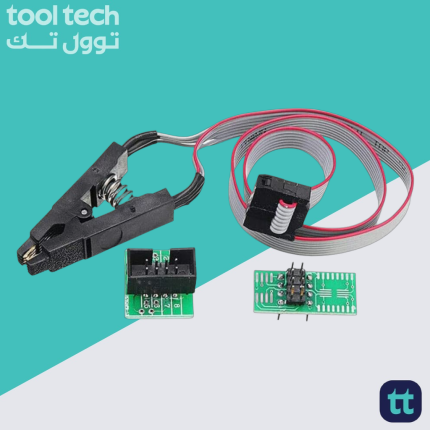
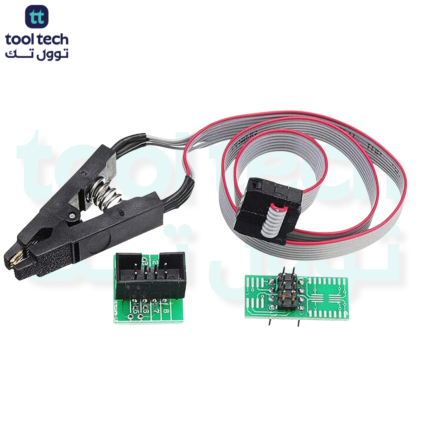
Included Accessory: The small green PCB in the image is a SOP8/SOP16 to DIP8 adapter board, which allows you to program surface-mount (SMD) chips using the ZIF socket.
Common Use Cases
-
BIOS Recovery: Flashing corrupt BIOS chips on motherboards or laptops.
-
Router/Modem Repair: Updating or restoring firmware on networking equipment.
-
Microcontroller Projects: Interfacing with memory modules for data storage projects.
-
Data Recovery: Reading data directly from memory chips when the host device is non-functional.
Important Considerations
-
Voltage Levels: By default, these programmers often operate at 5V logic. Many modern BIOS and Flash chips operate at 3.3V. Using the programmer directly can sometimes damage 3.3V chips. Many users perform a “3.3V mod” to the board or use a logic level shifter to ensure safe operation.
-
Software: It is typically used with open-source software like AsProgrammer, NeoProgrammer, or flashrom on Windows or Linux.
















Reviews
There are no reviews yet.