

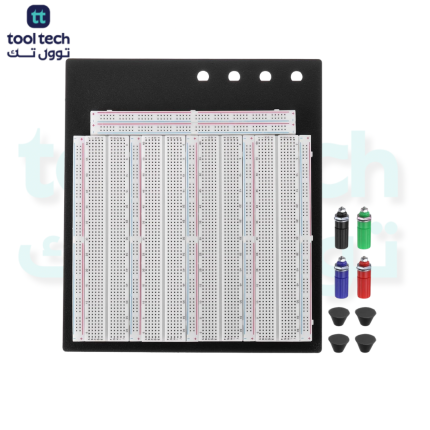

Description
ZY-204 Solderless Breadboard – 1660 Tie Points
The ZY-204 is a versatile, mid-to-large capacity solderless breadboard designed for intermediate and advanced electronics projects. It balances a significant component-mounting area with a space-saving footprint, making it a favorite for engineers, students, and hobbyists who need a reliable platform for prototyping circuits that exceed the capacity of standard hobby boards.
Technical Specifications
| Feature | Specification |
| Total Tie-Points | 1660 |
| Configuration | 2 Terminal Strips (1260 points) + 4 Distribution/Power Strips (400 points) |
| Binding Posts | 3 (Red, Black, Green) |
| Base Plate | Powder-coated metal with non-slip rubber pads |
| Material | ABS plastic (board), Nickel-plated phosphor bronze (clips) |
| Pitch | 2.54mm (0.1″) standard |
| Wire Compatibility | 20–29 AWG solid-core wire |
Key Features
-
Optimized Workspace: With 1660 tie points, the ZY-204 provides enough space to comfortably mount microcontrollers (like an Arduino Uno or Nano), several integrated circuits (ICs), and a variety of sensors or peripheral components simultaneously.
-
Integrated Power Management: The four dedicated distribution strips allow for clear and segregated power management, such as running separate 3.3V and 5V rails, along with dedicated ground returns, ensuring signal integrity across your prototype.
-
Robust Construction: Mounted on a sturdy metal base, this board is designed to sit flat on a workbench without flexing. The rubber feet prevent it from slipping while you are inserting components or measuring with probes.
-
High-Quality Contacts: The nickel-plated phosphor bronze spring clips ensure low-resistance connections that hold up to repeated insertions, ensuring that your circuit remains stable throughout the testing process.
Best Practices for Use
-
Use Solid-Core Wire: To keep the internal spring clips from becoming loose or deformed, always use solid-core jumper wires (typically 22-24 AWG). Avoid stranded wire, which can fray and cause intermittent connections.
-
Power Rail Management: Connect your power source to the binding posts first, then jump that power to your distribution strips. This creates a clean, central power hub for your entire project.
-
Clean Component Leads: Before inserting recycled components or old ICs, ensure the leads are clean and free of leftover solder, as debris can damage the contact springs inside the breadboard.
-
Heat Management: Never use a soldering iron directly on the breadboard. If you need to make a permanent connection, solder the components to a small piece of perfboard or a breakout board first, then plug that assembly into the breadboard.













Reviews
There are no reviews yet.