



Description
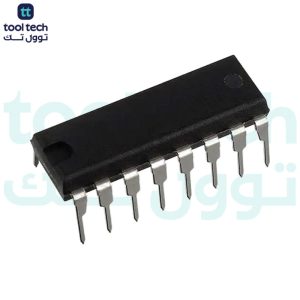
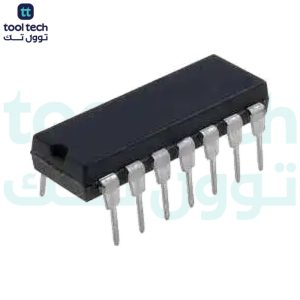
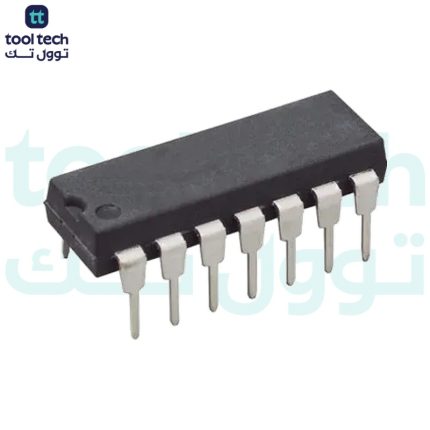
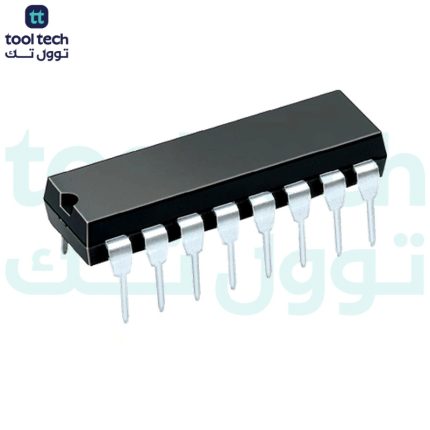
The 74HC595 is a
very
handy IC used in many microcontroller projects. You clock in 8 bits of data (like, on/off settings for 8 LEDs) via two lines, and when you toggle a third line, it pops these settings out on 8 outputs on the IC. So you trade 3 valuable lines on your microcontroller for 8 outputs – a pretty good deal, eh?
This is called “Shifting data out” of the microcontroller by “synchronous serial communication”. This is the serial part of the deal, where each bit is “shifted in” one at a time, then BOOM, they all appear at once (in
parallel)
on the chip’s output
.
There are some great tutorials on how to use a shift register.
Here’s one
for the Arduino microcontroller, but the technique holds true for pretty much all microcontrollers!
74HC595
Features
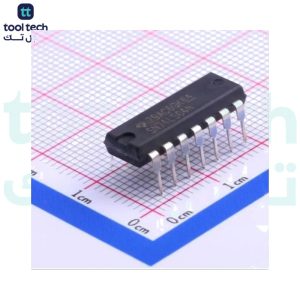
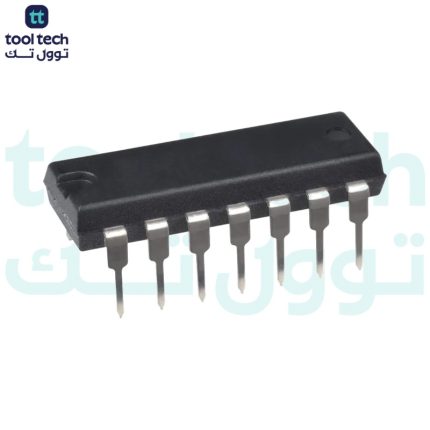
It is a shift register with 8-bit serial input and 8-bit serial or 3-state parallel outputs.
The operating voltage of this IC is from 2V to 6V.
The output voltage is equal to the operating voltage of this IC.
It is based on CMOS logic and therefore consumes a very low power of 80uA.
The output source/sink current is 35mA.
It has a characteristic of high noise immunity.
It can be easily cascaded through pin 9 with more IC to get more outputs.
The maximum clock frequency is 25Mhz @4.5V.
Schmitt trigger action is provided on all inputs.
SN74HC595 Applications
This IC has a multitude of applications and is used in wide arrays of products such as computer peripherals, Appliances, etc. A few applications are enlisted below:
Holding Data for a long time period
Serial to Parallel Data Conversion
General Purpose Logic
Controlling LED’s
Datasheet
















Reviews
There are no reviews yet.