


Description
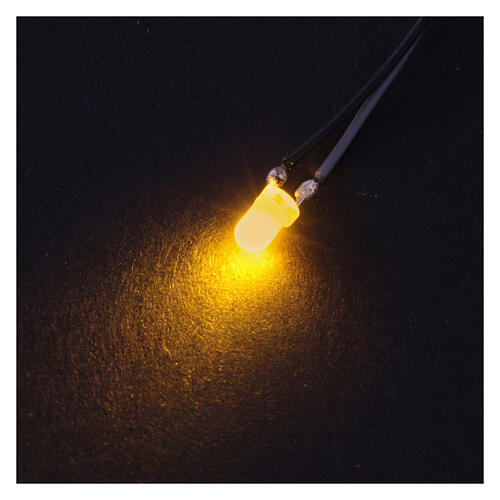
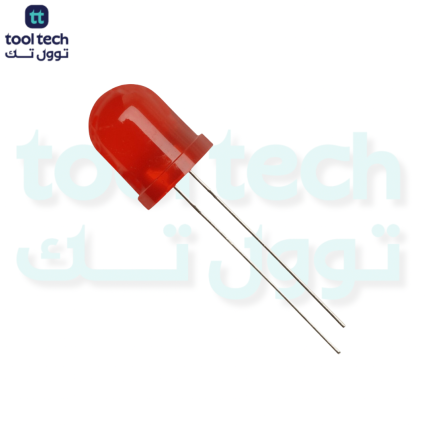
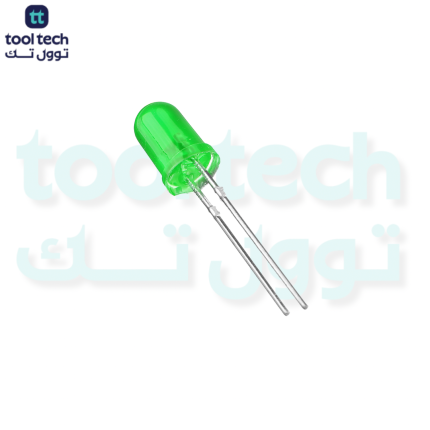
This image displays a standard single-color Light Emitting Diode (LED), commonly referred to as a through-hole LED.
Key Characteristics
-
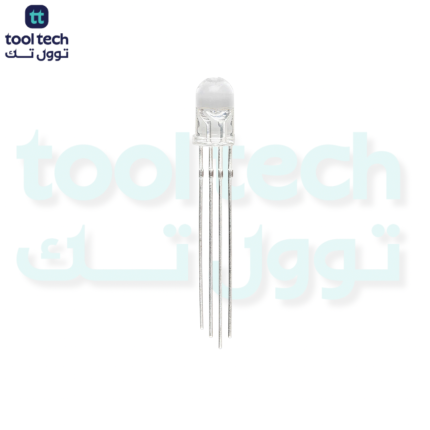
Simple Operation: Unlike the RGB LED you shared previously, this component is designed to emit only one specific color—in this case, yellow.
-
Two Pins: It features two leads of different lengths:
-
Anode (Longer Leg): The positive terminal, which must be connected to the positive voltage source.
-
Cathode (Shorter Leg): The negative terminal, which connects to the ground.
-
-
Polarity Matters: LEDs are diodes, meaning they only allow current to flow in one direction. If you connect it backward, it will not light up.
Basic Circuitry
Because an LED acts as a diode with a very low forward voltage threshold, connecting it directly to a battery or power source without a current-limiting resistor will cause it to burn out almost instantly.
-
Resistor Role: A resistor is placed in series with the LED to limit the current flowing through it to a safe level, typically calculated using Ohm’s Law: $R = \frac{V_{source} – V_{f}}{I_{f}}$.
-
$V_{source}$: The voltage of your power supply.
-
$V_{f}$: The forward voltage drop of the LED (typically ~2V for yellow/red, ~3V for blue/white).
-
$I_{f}$: The desired operating current (usually 10mA to 20mA).
-












Reviews
There are no reviews yet.