



Description
Key Features
-
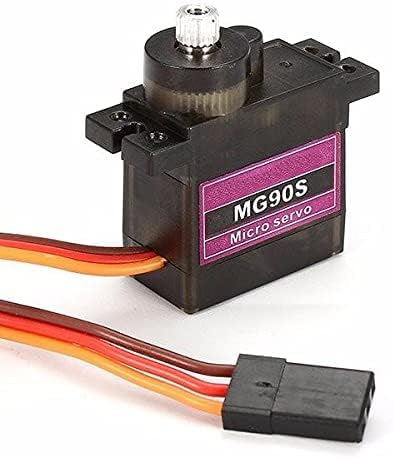
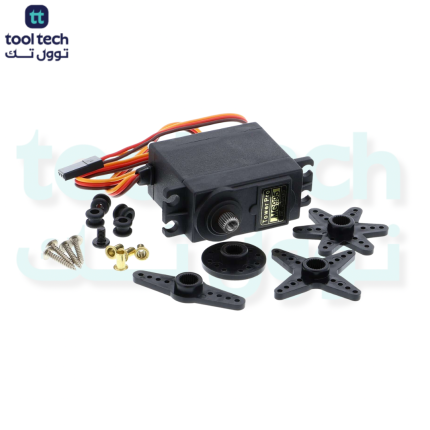
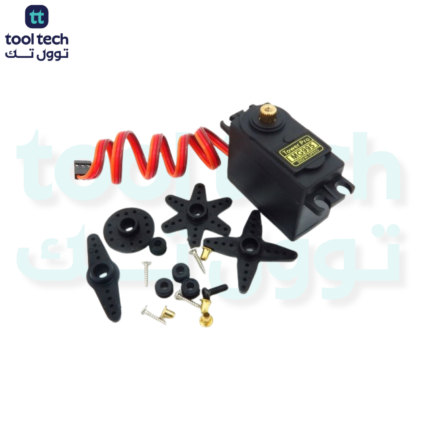
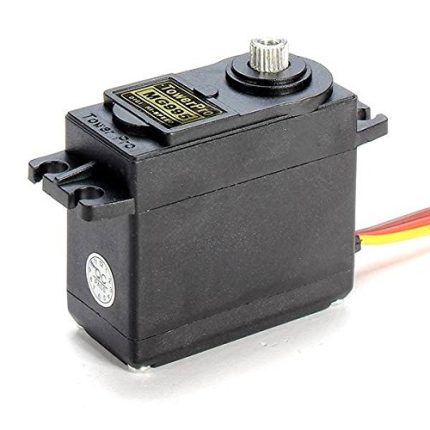
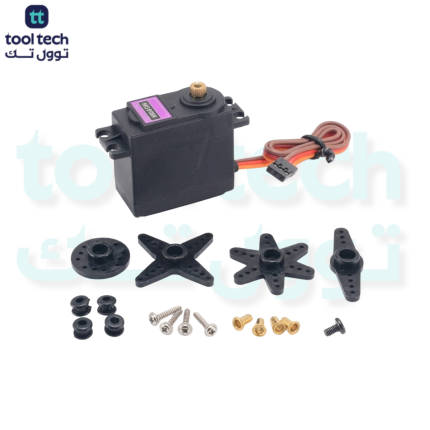
Metal Gear Train: Unlike standard micro servos that use fragile plastic gears, the MG90S features metal gears, offering significantly higher strength, durability, and resistance to wear or stripping under load.
-
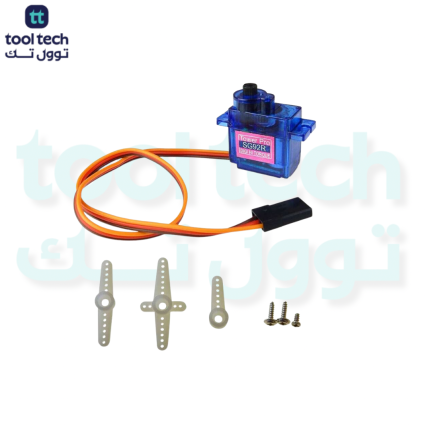
Compact & Lightweight: With a footprint of approximately 22.8 x 12.2 x 28.5 mm and a weight of about 13.4g, it is perfect for space-constrained projects.
-
Easy Integration: It uses a standard 3-pin connector (GND, VCC, and Signal) and is compatible with most microcontrollers (like Arduino, Raspberry Pi, etc.) using standard PWM (Pulse Width Modulation) libraries.
-
Strong Performance: Despite its small size, it provides a respectable amount of torque, making it suitable for tasks like operating small robotic arms, camera pan/tilt mounts, or steering surfaces on small RC planes.
Technical Specifications
| Feature | Specification |
| Operating Voltage | 4.8V – 6.0V DC |
| Stall Torque | ~1.8 kg·cm (at 4.8V) to 2.2 kg·cm (at 6.0V) |
| Operating Speed | 0.10s/60° (at 4.8V) to 0.08s/60° (at 6.0V) |
| Rotation Angle | Typically 180° (standard) or 360° (continuous rotation versions exist) |
| Weight | ~13.4g |
| Connector | Standard 3-pin JR/Futaba compatible |
Note on Variations: While the standard MG90S is designed to move to a specific angle (usually 180°), there are also “Continuous Rotation” versions available that can spin 360° indefinitely. Be sure to check the specific product listing if you require a specific type of movement.
Common Applications
-
Robotics: Ideal for joints in small robotic arms, grippers, or walking robots (hexapods/bipeds).
-
RC Models: Commonly used for steering, throttle, or control surfaces on smaller RC cars, planes, and drones.
-
Camera Gimbals: Perfect for lightweight pan-and-tilt mechanisms.
-
DIY Automation: Useful for actuating small valves, locks, or levers in home automation projects.
Pro-Tip for Installation: Servos can draw significant current spikes during startup or when under load. It is highly recommended to power them from an independent, regulated 5V power supply rather than directly from a microcontroller’s 5V pin, and to add a capacitor across the power rails to stabilize the voltage.


















Reviews
There are no reviews yet.