




Description
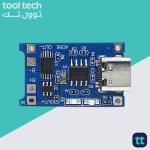
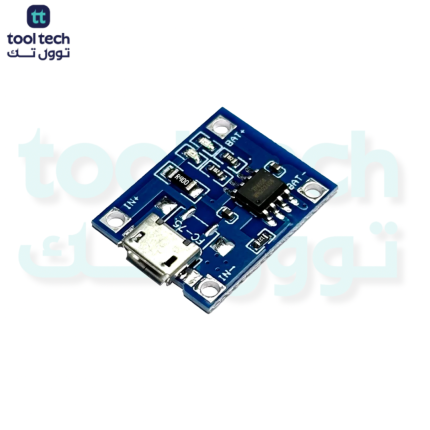
TP4056 USB-C (Type-C) Battery Charger Module
The TP4056 with USB-C is the modernized iteration of the classic TP4056 charging module. It retains the same reliable lithium-ion/lithium-polymer charging performance as the Micro-USB version but upgrades the input interface to the increasingly standard USB Type-C connector, offering better durability and reversible plug-in convenience.
Technical Specifications
| Feature | Specification |
| Input Interface | USB Type-C (or solder pads) |
| Input Voltage | 4.5V – 5.5V DC |
| Charging Voltage | 4.2V ± 1.5% |
| Max Charging Current | 1A (Adjustable via resistor) |
| Protection IC | DW01 / 8205A (on protected models) |
| Cut-off Current | ~10% of programmed current |
| Operating Temperature | -10°C to +85°C |
How It Works
This module manages the full charge cycle for a single-cell 3.7V Li-ion/Li-Po battery:
-
Constant Current (CC) Phase: The module charges the battery at a programmed rate (default 1A) until the battery reaches 4.2V.
-
Constant Voltage (CV) Phase: Once at 4.2V, the module maintains the voltage while gradually decreasing the current, ensuring the battery reaches full capacity without being overcharged.
-
Protection (Integrated): Most Type-C versions include a protection circuit (DW01/8205A) that prevents:
-
Overcharging: Stops the charge at 4.2V.
-
Deep Discharge: Disconnects the load if the battery drops below ~2.5V.
-
Short Circuit: Immediately disconnects the output to prevent high-current hazards.
-
Key Advantages of the Type-C Interface
-
Durability: The Type-C connector is structurally stronger than the older Micro-USB, which is prone to pins breaking or the port separating from the PCB after repeated use.
-
Compatibility: Allows you to use modern charging cables (USB-C to USB-C or USB-A to USB-C) for your electronics.
-
Ease of Use: Being a reversible connector, it eliminates the frustration of “plugging it in the wrong way,” which is particularly helpful in user-facing project enclosures.
Important Installation & Safety Guidelines
-
Polarity Verification: Before soldering, verify that your battery (B+ and B-) matches the markings on the board. Connecting these reversed will almost certainly destroy the charging IC.
-
Solder Pad Usage: If you prefer not to use the USB-C port, you can provide the 5V input directly via the IN+ and IN- solder pads.
-
Heat Management: When charging at the full 1A rate, the TP4056 chip will generate significant heat. It is designed to work this way, but ensure it is not enclosed in a completely airtight container.
-
Resistor Adjustment (RPROG): If you are charging smaller cells (e.g., 200mAh-500mAh), you should replace the onboard “PROG” resistor with a higher value to lower the charge current, as 1A may exceed the safe fast-charge rating of very small batteries.



















Reviews
There are no reviews yet.