

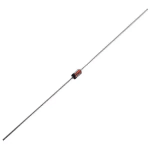


Description
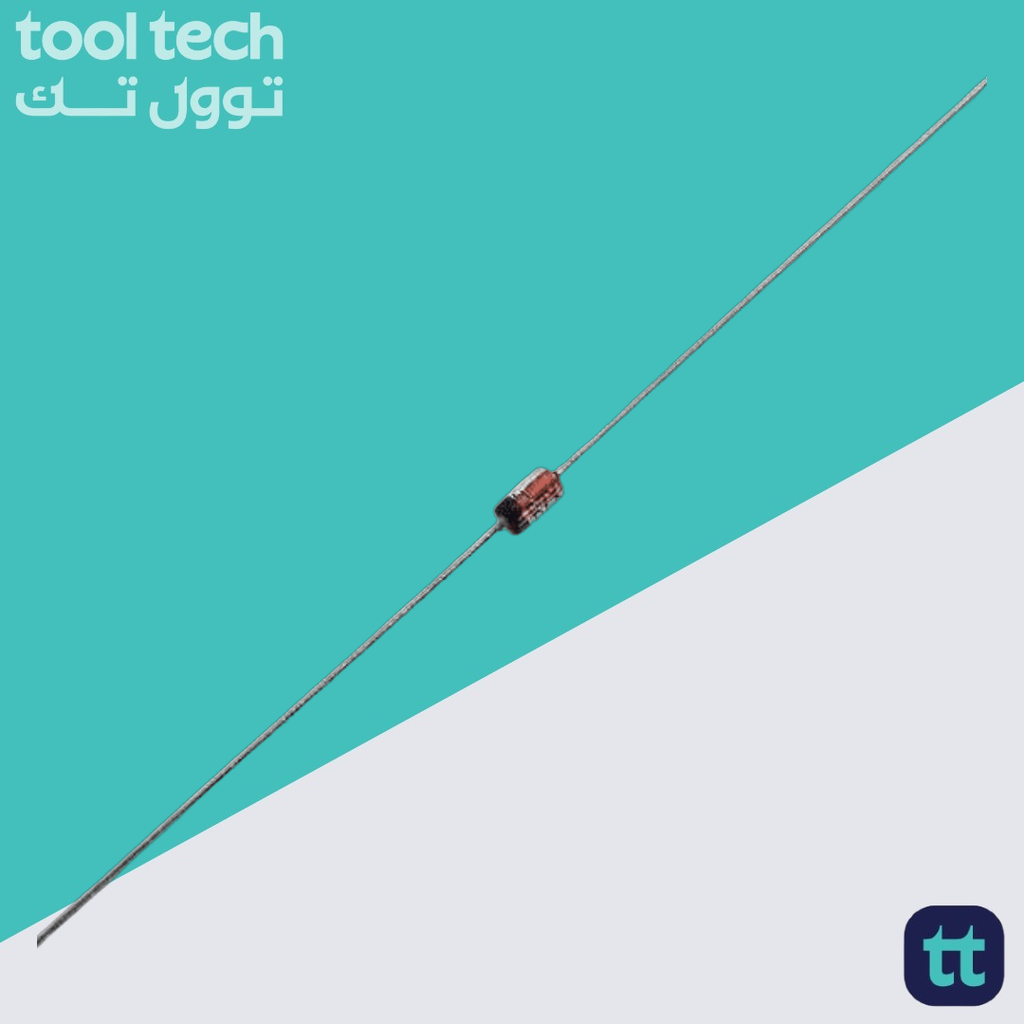
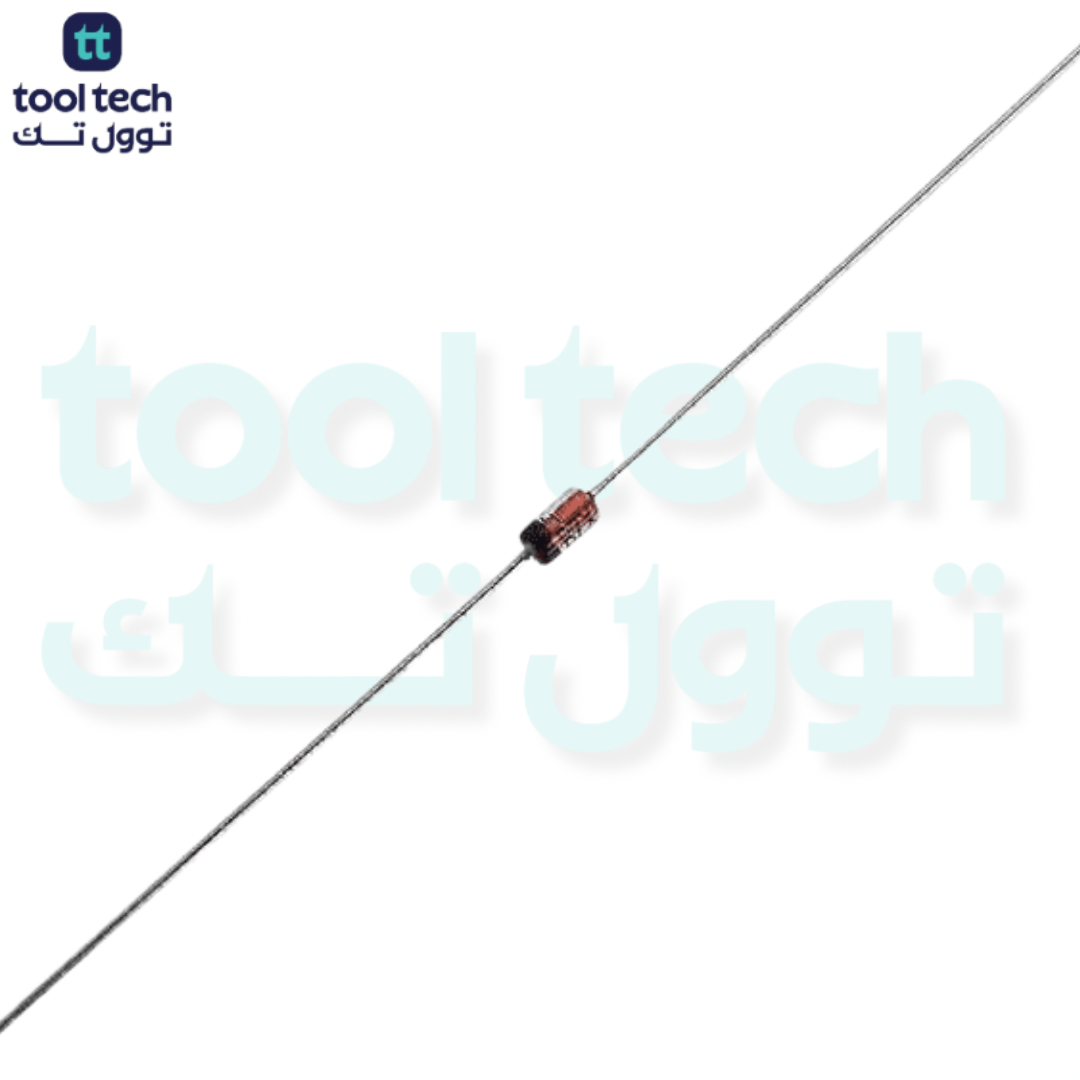
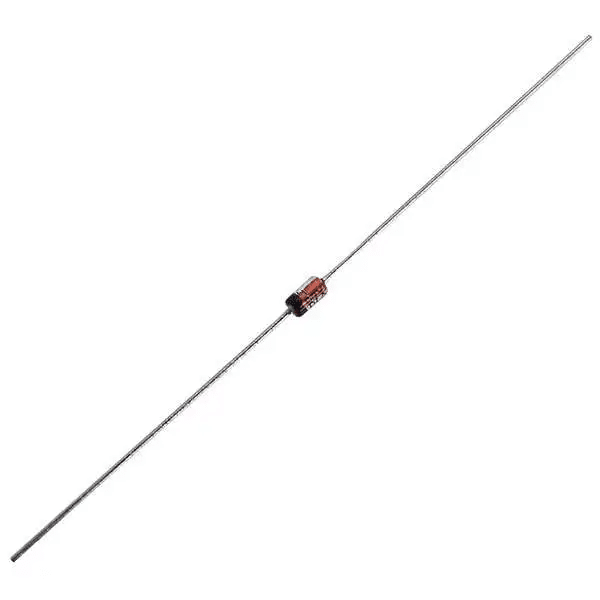
The 5.6V 0.5W Zener diode is one of the most widely used components in circuit design. Its 5.6V rating is particularly popular because it is very stable against temperature fluctuations compared to other voltages. The most common industry-standard parts for this specification are the 1N5232 or the BZX79-C5V6.
Technical Specifications
| Parameter | Specification |
| Nominal Zener Voltage ($V_Z$) | 5.6V |
| Power Dissipation ($P_D$) | 0.5W (500mW) |
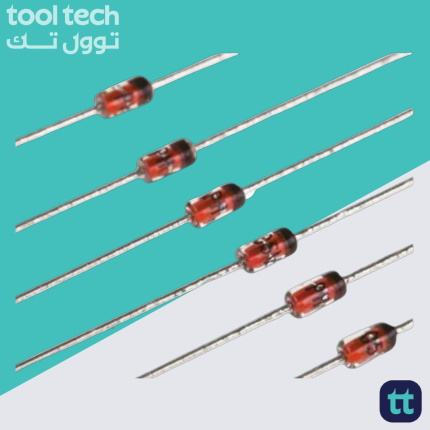
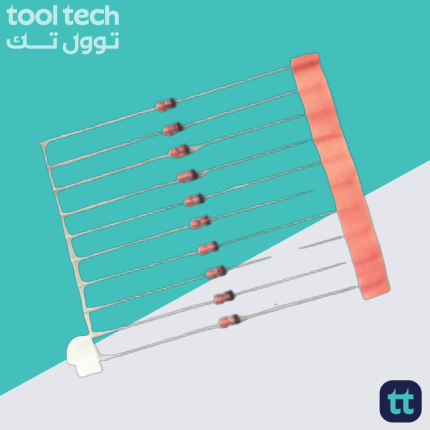
| Package Type | DO-35 (Glass Axial Lead) |
| Tolerance | $\pm 5\%$ |
| Operating Temperature | -65°C to +200°C |
Understanding Operation
The 5.6V Zener diode operates in the reverse breakdown region. It is typically used in two primary circuit roles:
-
Shunt Voltage Regulator: Maintains a constant 5.6V output rail. It requires a series current-limiting resistor ($R_s$) to function safely.
-
Overvoltage Protection: Clamps voltage spikes on a signal line to 5.6V to protect sensitive microcontrollers or logic chips.
Application & Replacement Notes
-
Thermal Safety: To keep this 500mW device within its safe operating range, ensure the current ($I_Z$) through the diode does not exceed the limit. Using $I_{Zmax} = P_D / V_Z$, the maximum current must be kept below ~89mA ($0.5W / 5.6V$).
-
Replacement: If you need a replacement, search for a 5.6V 500mW Zener in a DO-35 package. The “C5V6” marking on the diode body confirms the voltage and the 5% tolerance.
-
Troubleshooting: A common failure mode is a short circuit. If your 5.6V rail is grounded or reading zero volts, test the diode with a multimeter; if it measures near 0 ohms in both directions, it must be replaced.















Reviews
There are no reviews yet.