



Description
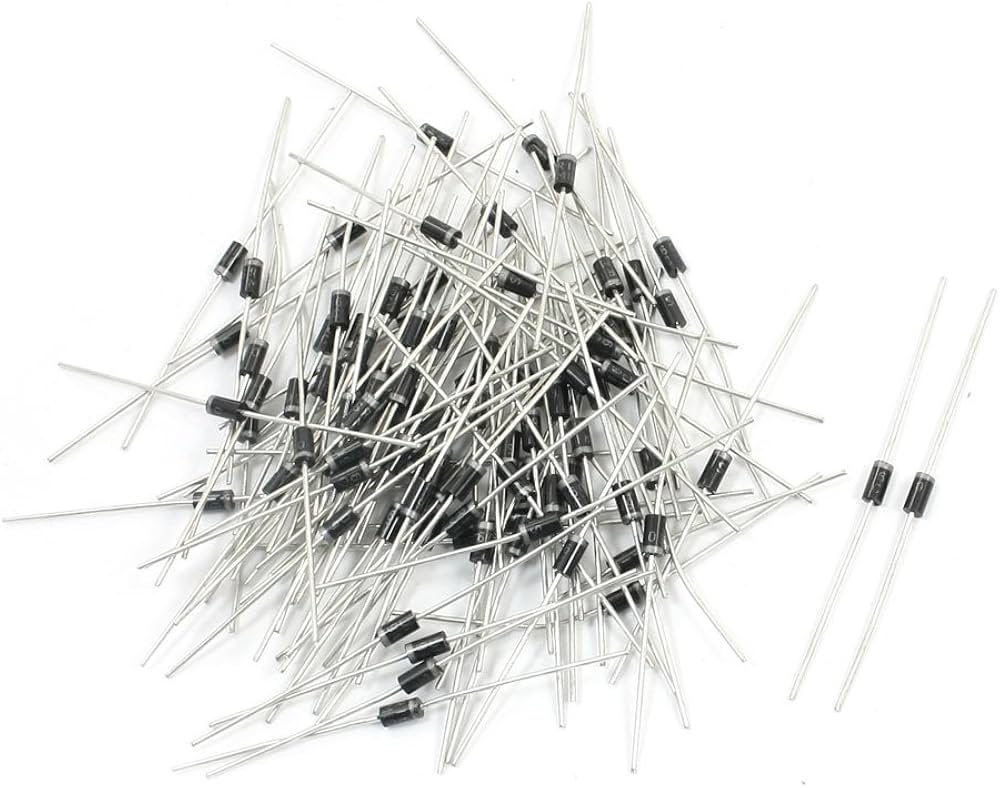
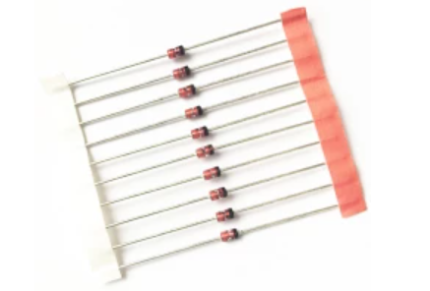
The 1N4007 is the industry-standard general-purpose silicon rectifier diode. It is widely used because it can handle high voltages, making it compatible with both low-voltage DC circuits and standard AC mains rectification.
Technical Specifications
| Parameter | Rating |
| Peak Repetitive Reverse Voltage ($V_{RRM}$) | 1000 V |
| Average Rectified Forward Current ($I_{O}$) | 1.0 A |
| Non-Repetitive Peak Surge Current ($I_{FSM}$) | 30 A (8.3 ms half-sine wave) |
| Forward Voltage Drop ($V_{F}$) | ~1.1 V (at 1A) |
| Package Type | DO-41 (Axial leaded) |
Key Characteristics
-
Rectification: Its primary function is to allow current to flow in only one direction, converting AC (alternating current) to DC (direct current).
-
High Voltage Tolerance: The 1000V rating means it can safely withstand the peak voltages associated with 120V or 230V AC power lines.
-
Polarity: This diode is polarized. The end marked with a silver band is the Cathode (-), and the unmarked side is the Anode (+).
Common Applications
-
AC-to-DC Power Supplies: Used as a bridge or half-wave rectifier in small power adapters.
-
Reverse Polarity Protection: Placed in series with a load to protect sensitive electronics from being connected to a battery or power supply the wrong way around.
-
Flyback Protection: When used in parallel with a relay coil or DC motor, it suppresses the high-voltage spikes (“inductive kickback”) that occur when the current is turned off, preventing damage to transistors or microcontrollers.
Design Notes
-
Speed: The 1N4007 is a “standard recovery” diode. It is designed for low-frequency applications (50–60 Hz). It is not suitable for high-frequency switching power supplies, as its slow switching speed will lead to overheating and inefficiency.
-
Heat Management: While rated for 1A, running it continuously at its maximum limit will cause it to get quite hot. In high-density designs, ensure there is enough clearance or copper surface area on the PCB to allow for thermal dissipation.














Reviews
There are no reviews yet.