


Description
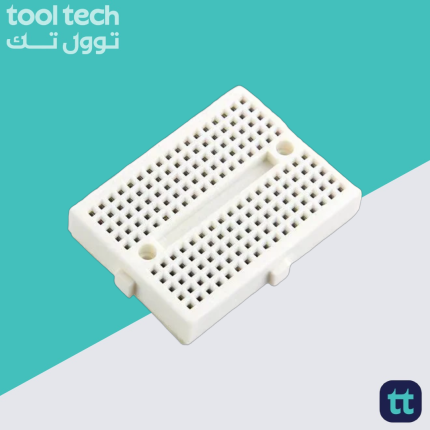
170-Tie Point Mini Breadboard – Red
The 170-Tie Point Mini Breadboard (Red) is a high-visibility, ultra-compact prototyping solution designed for small-scale electronic projects and rapid testing. Its vibrant red housing is perfect for color-coding specific stages of a design—such as marking high-voltage or power-critical modules—making it an essential tool for organized and efficient prototyping.
Technical Specifications
| Feature | Specification |
| Total Tie-Points | 170 |
| Dimensions | 4.5cm x 3.5cm x 0.85cm |
| Material | Durable ABS plastic (housing), Nickel-plated phosphor bronze (contacts) |
| Mounting | Self-adhesive foam backing |
| Interlocking | Yes (modular side tabs) |
| Wire Compatibility | 20–29 AWG (Solid-core wire recommended) |
Key Features
-
Ultra-Compact Design: Measuring just 4.5cm x 3.5cm, this board is ideal for space-constrained environments such as wearable technology, compact sensor nodes, or micro-controller breakout projects.
-
Visual Organization: The red color is frequently used by professionals and students to signify “power” or “critical” circuit modules, helping to prevent wiring errors in complex setups.
-
Secure Mounting: Features a reliable self-adhesive backing, allowing you to mount the board permanently inside project boxes, on chassis, or onto larger prototyping rigs.
-
Modular Scalability: Equipped with interlocking tabs, it can be snapped together with other 170-point breadboards, allowing you to expand your workspace as your project grows.
-
Standard Pitch: Maintains the industry-standard 2.54mm (0.1″) pin spacing, ensuring compatibility with all DIP ICs, headers, and standard jumpers.
Best Practices for Use
-
Jumper Selection: Use 22–24 AWG solid-core jumper wires. Stranded wires are discouraged as they can fray and damage the internal phosphor bronze clips, leading to poor electrical contact.
-
Adhesive Application: For a permanent, stable bond, clean the surface of your project enclosure with isopropyl alcohol before applying the adhesive backing.
-
Insertion Awareness: Insert components vertically. Inserting pins at an angle can cause the ABS plastic to crack or the internal spring clips to lose their tension.
-
Maintenance: Avoid applying solder directly to the breadboard. If components require permanent connections, solder them to a small piece of perfboard or a breakout adapter first.



















Reviews
There are no reviews yet.