


Description
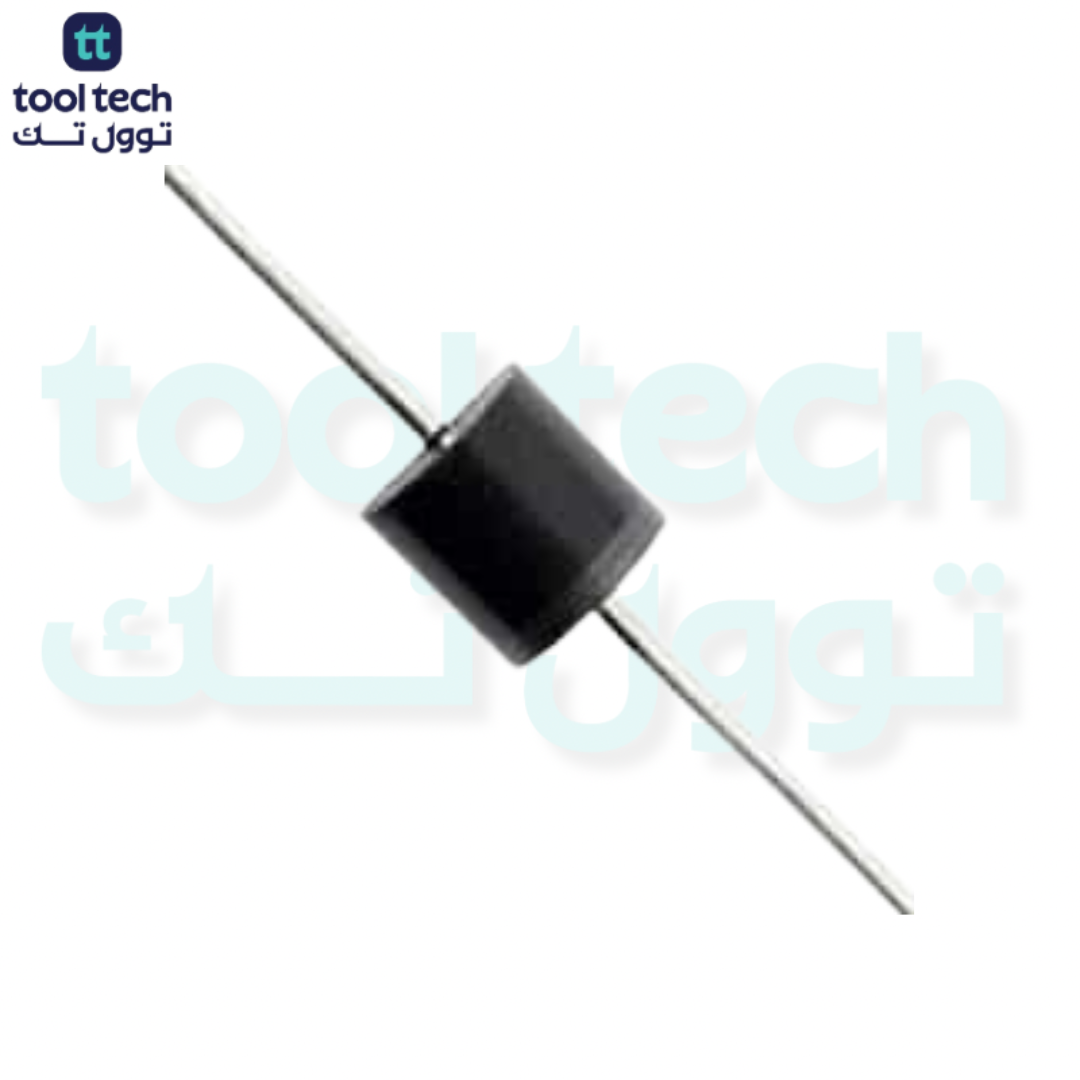
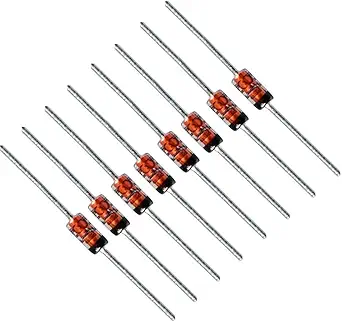
The 1N5408 is a general-purpose silicon rectifier diode, very similar in function to the 1N4007 but designed for applications requiring a higher current capacity.
Technical Specifications
| Parameter | Rating |
| Average Rectified Forward Current ($I_O$) | 3.0 A |
| Peak Repetitive Reverse Voltage ($V_{RRM}$) | 1000 V |
| Non-Repetitive Peak Surge Current ($I_{FSM}$) | 200 A (for 8.3ms) |
| Forward Voltage Drop ($V_F$) | ~1.2 V (at 3A) |
| Reverse Leakage Current ($I_R$) | 10 µA |
| Package Type | DO-201AD (Axial) |
Key Comparison: 1N4007 vs. 1N5408
-
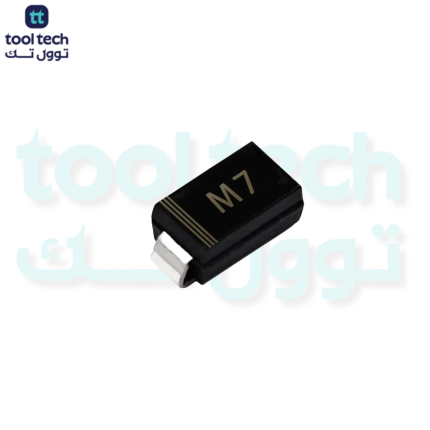
Current Capacity: The primary difference is the current rating. While the 1N4007/M7 is limited to 1A, the 1N5408 is rated for 3A.
-
Physical Size: Because it handles higher current, the 1N5408 is physically larger than the 1N4007. It comes in a DO-201AD package, which features thicker leads and a larger plastic body to dissipate heat more effectively.
-
Surge Capability: The 1N5408 can withstand a massive surge current of 200A, making it much more robust than the 1N4007 (30A) for circuits that may experience initial high-inrush currents, such as motor start-ups or transformer charging.
Important Design Considerations
-
Standard Recovery: Like the 1N4007, this is a standard recovery diode. It is intended for low-frequency rectification (50/60 Hz). Do not use this for high-frequency switching circuits (like high-speed DC-DC converters), as it will overheat due to long reverse recovery times.
-
Heat Management: When operating near the 3A threshold, the 1N5408 will dissipate significantly more heat ($P \approx 3.6W$). It is critical to leave enough lead length to help with thermal conduction or use a PCB layout that allows for adequate heat dissipation into the copper traces.
-
Polarity: The component follows standard marking conventions: the silver band indicates the Cathode (-), and the body side is the Anode (+).
Typical Applications
-
High-Current Power Supplies: Used as a rectifier in power supply circuits where the load requires up to 3 Amps.
-
Battery Charging: Used in charging circuits where current flow must be unidirectional and the current demand is higher.
-
Heavy Duty Protection: Protection of inductive loads (solenoids, large relays) that generate significant flyback energy.













Reviews
There are no reviews yet.