


Description
Identification Overview
-
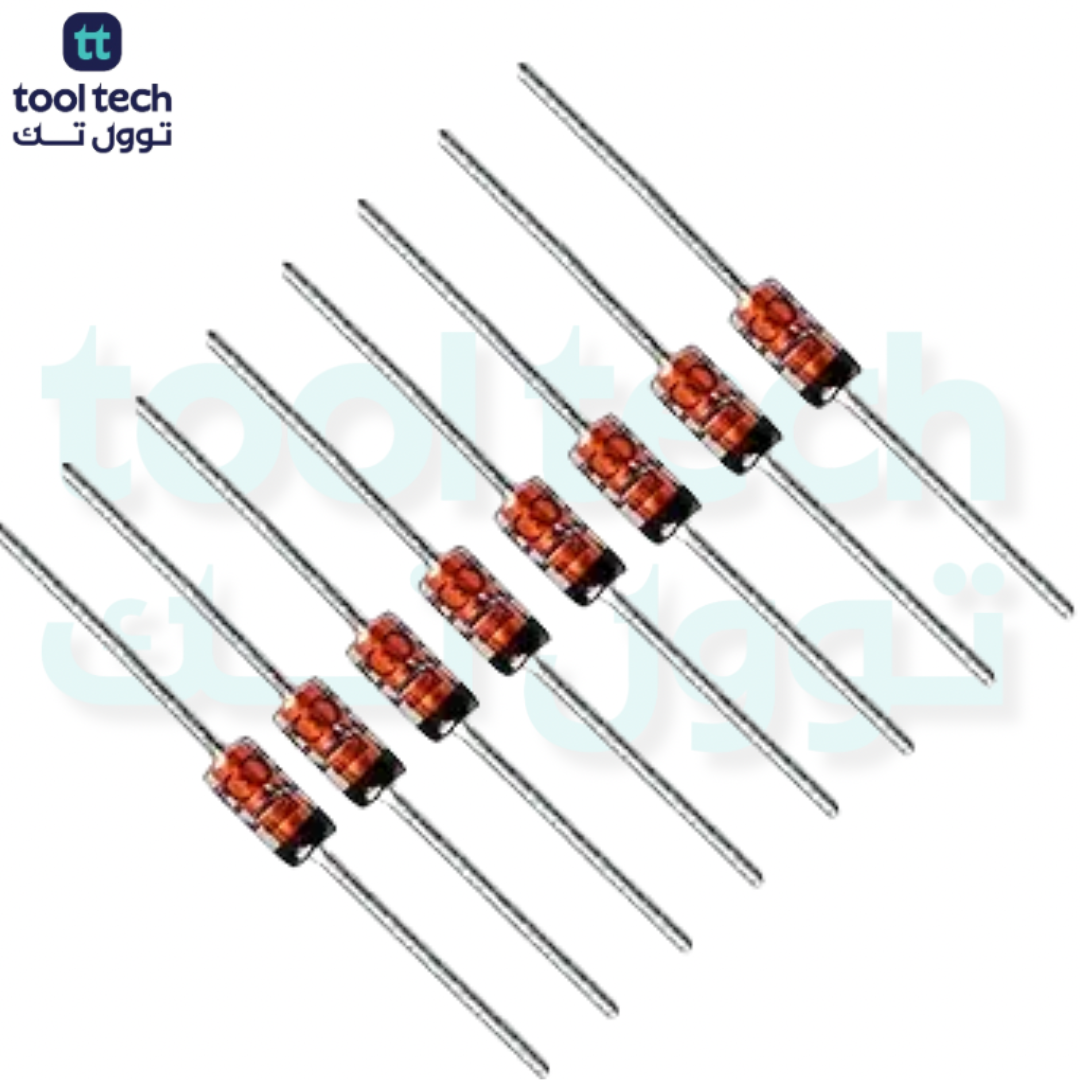
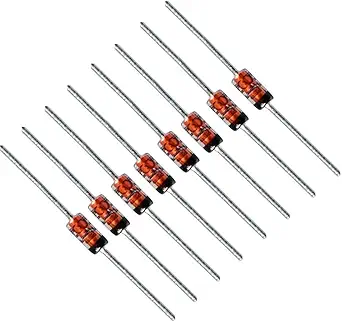
Likely Part Identification: The “C22” indicates a nominal Zener voltage of 22V. The “PH” suffix is often a internal batch or factory indicator used by Philips/NXP.
-
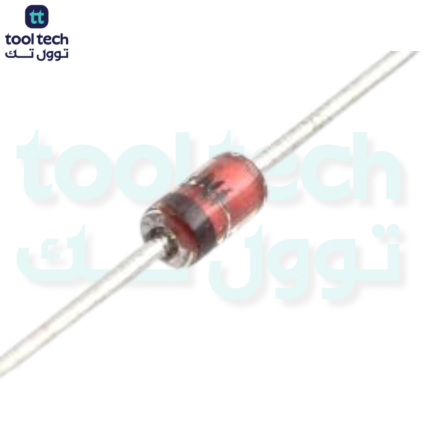
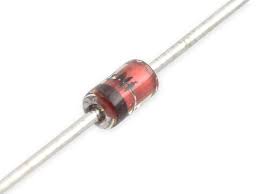
Common Equivalents: Components marked “C22PH” often correspond to the BZX79-C22 (in a DO-35 glass package) or sometimes the BZV85-C22 (in a larger DO-41 package), depending on the physical size of the component you have.
Technical Specifications (Typical for 22V Zener)
| Parameter | Specification |
| Nominal Zener Voltage ($V_Z$) | 22V |
| Power Dissipation ($P_D$) | 500mW (DO-35) or 1W+ (DO-41) |
| Tolerance | $\pm 5\%$ |
| Configuration | Unidirectional |
| Package Type | Glass Axial Lead (DO-35 or DO-41) |
How to Verify for Your Application
-
Check Physical Size:
-
DO-35: Small glass body (approx. 4mm long), thin leads. This usually corresponds to the 500mW BZX79 series.
-
DO-41: Larger glass body (approx. 5mm long), thicker leads. This usually corresponds to the 1W+ BZV85 series.
-
-
Verify Circuit Context: If the component is placed in parallel with a load (connected to ground) and is intended to stabilize a voltage rail, it is functioning as a shunt regulator. If it is placed across a relay coil or motor, it is functioning as a flyback (protection) diode.
-
Use a Multimeter: If the component is removed from the circuit, you can test it using the “Diode Test” mode on a multimeter. It will show a standard forward voltage drop (approx. 0.6V–0.7V) in one direction and behave as an open circuit in the other, unless the test voltage exceeds the Zener voltage (22V).











Reviews
There are no reviews yet.