


Description
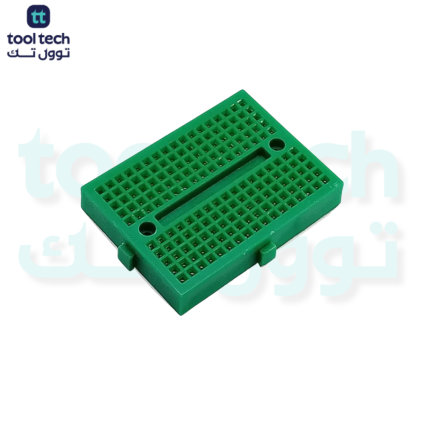
170-Tie Point Mini Breadboard – Yellow
The 170-Tie Point Mini Breadboard (Yellow) is an ultra-compact, high-visibility prototyping platform engineered for precision and organization. Its distinct yellow housing makes it an excellent choice for isolating specific functions within a circuit—such as signaling, debugging, or input/output stages—ensuring that your project remains easy to navigate as it scales.
Technical Specifications
| Feature | Specification |
| Total Tie-Points | 170 |
| Dimensions | 4.5cm x 3.5cm x 0.85cm |
| Material | High-impact ABS plastic, Nickel-plated phosphor bronze |
| Mounting | Self-adhesive foam backing |
| Interlocking | Yes (side tabs for modular expansion) |
| Wire Compatibility | 20–29 AWG (Solid-core wire recommended) |
Key Features
-
Space-Efficient: Perfect for small-scale projects like wearable tech, compact IoT sensor nodes, or portable gadgets where real estate is strictly limited.
-
Organizational Utility: The bright yellow color is commonly used by engineers to distinguish “User Input” or “Alert/Output” modules from the rest of the board, simplifying troubleshooting.
-
Secure Installation: Includes pre-applied adhesive backing, allowing for clean, permanent mounting onto project boxes, metal chassis, or inside custom enclosures.
-
Modular Connectivity: Features side interlocking slots, allowing you to daisy-chain this board with other 170-point breadboards of any color to accommodate more complex circuit designs.
-
Standardized Layout: Uses the 2.54mm (0.1″) pitch, making it fully compatible with all standard DIP integrated circuits, pin headers, and jumper wires.
Best Practices for Use
-
Use Solid-Core Wire: To preserve the structural integrity of the nickel-plated spring clips, use 22–24 AWG solid-core jumper wires. Stranded wire can fray and cause poor electrical contact or permanent damage to the clips.
-
Mounting Prep: Before applying the adhesive backing, clean your target surface with isopropyl alcohol. This ensures a strong, lasting bond for the lifetime of your project.
-
Proper Insertion: Always insert components vertically. Applying force at an angle can weaken the ABS housing or bend the internal contact springs, leading to intermittent connections.
-
Avoid Solder: Never use a soldering iron directly on the breadboard. If components need to be joined, use a separate perfboard or breakout board and then plug that module into the breadboard.













Reviews
There are no reviews yet.